
Product news
Pressure sensor for ultra-high pressure applications
May 20, 2026
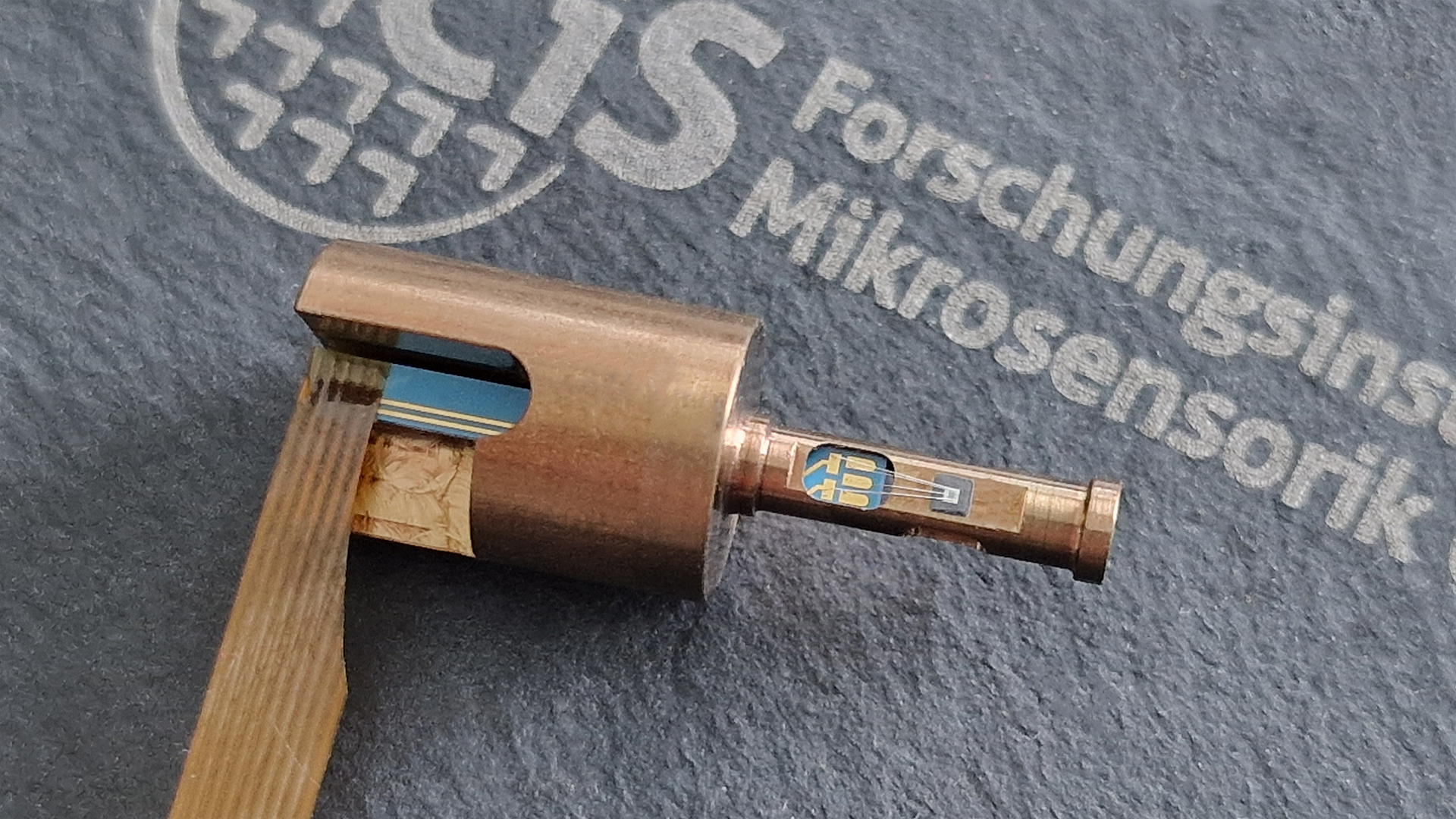
For ultra-high-pressure applications, a novel pressure sensor is being developed without a conventional diaphragm. While traditional pressure sensors use a diaphragm to increase sensitivity, this element is deliberately omitted at very high pressures. This results in a significantly more compact and robust sensor design, specifically intended for extreme pressure ranges. The developed technology platform offers strong application potential: possible features include front faces with a minimum diameter of only 1 mm, a pressure range of up to approximately 20,000 bar, an output span of more than 20 mV/V, and operating temperatures of up to 200 °C. Piezoresistive silicon chips are used, with the process medium contacting the sensor via steel. The sensor concept therefore combines miniaturization, high pressure resistance, and good measurement performance. Application fields include various high-pressure domains. For example, they include high-pressure chemistry, such as hydrogenation, polymerization, phase diagram analysis, or material investigations under extreme conditions. In these applications, the sensors must be precise, temperature-resistant, and resistant to aggressive media. Another important field is autofrettage, in which components are intentionally plastically deformed by very high internal pressure in order to increase their service life. This requires pressure-resistant sensors that are also resistant to shock and vibration. Precise pressure sensors are also essential in hydroforming (internal high-pressure forming, IHU) to ensure manufacturing quality and reproducibility. In injection molding, they are used to monitor cavity pressure, control the process, and improve quality. Overall, the technology addresses demanding industrial applications with extreme pressure requirements.
CiS Forschungsinstitut für Mikrosensorik GmbH