
Product news
Industrial Safety and Gas Detection - Foundations for Reliable Measurement Solutions
Apr 16, 2026
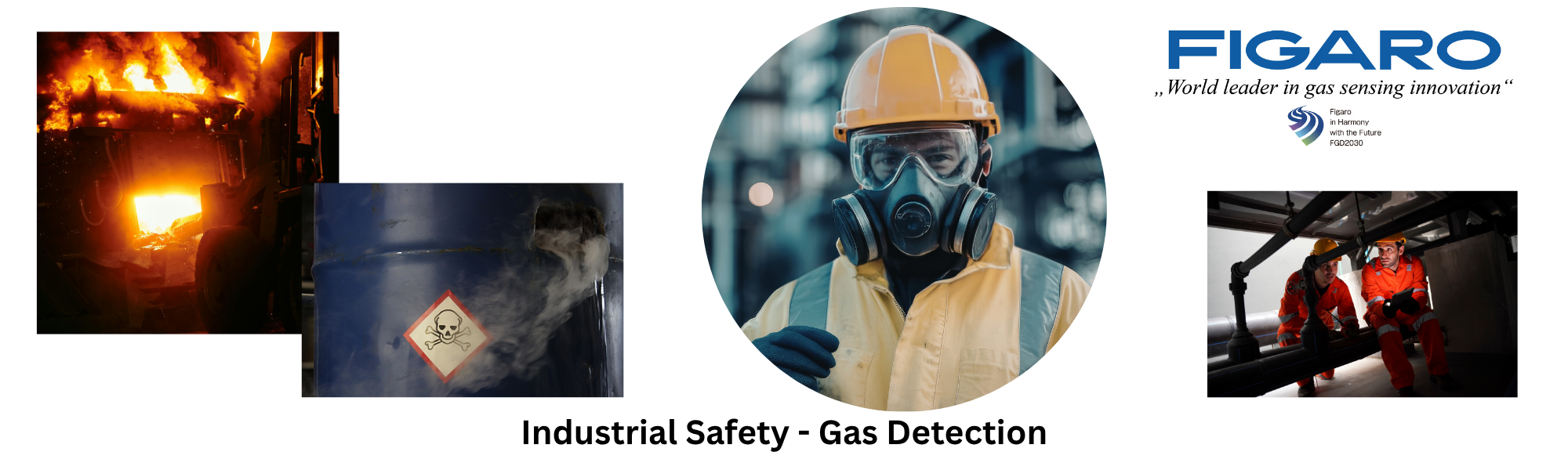
Across Europe’s industrial landscape, operations increasingly take place in environments shaped by invisible threats. Combustible, toxic, and asphyxiating gases silently endanger personnel, infrastructure, and continuity of operations. From chemical processing and energy production to food manufacturing and waste treatment, a seemingly minor leak can escalate into a major incident without timely detection.
Gas detection systems have, in response, evolved from optional safeguards into essential, regulation-driven elements of industrial design. Unlike fire or smoke detection, which respond after an incident has begun, gas sensors provide a proactive safeguard, identifying hazardous atmospheres before ignition, exposure, or oxygen depletion occurs.
Why Gas Detection Matters: Lessons from Industrial Incidents
The critical role of gas detection has been shaped by the consequences of historical industrial accidents, e.g.
Austrian Baumgarten natural gas hub explosion in 2017, caused by a suspected technical fault in a pipeline or filter system resulting in1 fatality and 21 injuries
UK Avonmouth water treatment incident, 2020. An explosion atop a biosolids silo, likely due to sparks from angle-grinding maintenance work igniting natural gas in the tank’s headspace leading to 4 deaths and 1 injury
South Korean Ganeung hydrogen explosion, 2019, triggered by oxygen contamination within a hydrogen storage tank at a pilot electrolyser hydrogen production plant culminating in 2 fatalities and 6 injuries.
Incidents such as the Baumgarten gas hub explosion, Gangneung hydrogen tank explosion, and Avonmouth water treatment event convey a clear message for OEMs: effective gas safety relies on early and reliable detection across diverse hazards and operating conditions. Whether minimising the risk of explosion from methane or rapidly diffusing hydrogen leaks, sensor systems must provide high sensitivity, rapid response, and placement aligned with gas behaviour.
These events also highlight the need for redundancy, fail safe operation, and integration with automated safety systems, ensuring detection triggers immediate mitigation actions such as shutdown, ventilation, or alarms, to protect lives and assets.
Gas hazards in industrial environments
Industrial gas risks are broadly grouped into three categories, each requiring distinct sensing strategies. Combustible and explosive gases, such as methane, propane, butane, hydrogen, and volatile organic compounds (VOCs) introduce ignition hazards when present within defined concentration limits, often forming rapidly without visible warning. Continuous monitoring, ensuring that any gas concentration changes are detected immediately is essential, particularly in ATEX-classified environments. Asphyxiating gases, including carbon dioxide, refrigerants, nitrogen and argon can displace oxygen in confined spaces, creating life-threatening conditions; whilst CO2 and refrigerants allow for direct detection, nitrogen and argon are typically monitored indirectly by measuring oxygen levels. Toxic gases, such as carbon monoxide, hydrogen sulphide, nitrogen dioxide, and ammonia, present serious health risks even at low concentrations, requiring detection aligned with occupational exposure limits and reliable long term sensor performance.
European Regulatory Framework
Within Europe, gas detection systems are shaped by long established, rigorous standards that influence both system certification and sensor selection by OEMs.
The ATEX Directives (2014/34/EU for equipment and 1999/92/EC for workplace safety) define requirements for operation in explosive atmospheres, supported by standards such as the EN 60079 series. Functional safety standards (IEC 61508 and IEC 61511) introduce Safety Integrity Level requirements for automated safety functions, while the Seveso III Directive mandates monitoring and risk mitigation at high hazard sites. Although these frameworks apply primarily to complete systems, they strongly influence which sensor technologies can be used and how they are implemented.
For combustible gases, ATEX imposes strict constraints related to ignition risk. Sensors must align with protection concepts such as intrinsic safety or flameproof enclosures, favouring technologies with controlled thermal behaviour, low power consumption, and predictable failure modes. Performance standards also require detection relative to the Lower Explosive Limit, fast response, and long term stability, shaping both sensor selection and calibration.
In asphyxiating gas applications, the focus shifts to oxygen monitoring, particularly in confined spaces. While ATEX may still apply in some cases, the priority is reliable detection of oxygen depletion or displacement by gases such as carbon dioxide. This drives the use of sensors with high reliability, low drift, and fail-safe operation, often linked to ventilation or alarm systems.
For toxic gases, requirements centre on human health protection at low concentrations, guided by exposure limits and standards such as EN 62990-1. Sensors must provide high sensitivity, selectivity, and stability at very low levels, with electrochemical technologies preferred. Accuracy, response time, and calibration traceability are also critical, especially where systems trigger automated safety actions.
Overall, European regulations do not prescribe specific sensor types but define the performance, safety, and certification constraints that narrow the viable options. As a result, sensor selection becomes a key design decision for OEMs, directly affecting the compliance, reliability, and effectiveness of gas detection systems across industrial applications.
Introducing Figaro Engineering
Against this regulatory and application driven backdrop, sensor manufacturers play an important role in helping OEMs deliver reliable and compliant gas detection systems. Figaro Engineering has over 50 years of experience in gas sensing and offers a broad range of technologies including MOS, catalytic, electrochemical, and infrared sensors. Known for their reliability, stability, and ease of integration into OEM designs, Figaro sensors are widely used in industrial safety applications. As regulations tighten and energy systems change, Figaro continues to support OEMs with practical and adaptable solutions. The following articles look at how these technologies meet the needs of combustible and explosive, asphyxiant, and toxic gas detection, helping guide sensor selection for each application.
1. Figaro sensors for Combustible and Explosive gases in Industrial Safety applications
2. Figaro sensors for asphyxiating gases in Industrial Safety applications
3. Figaro sensors for toxic gases in Industrial Safety applications
Figaro Engineering Inc.