
Produkt-Neuheit
Artemis II and the Ground Systems Behind the Mission
21.04.2026
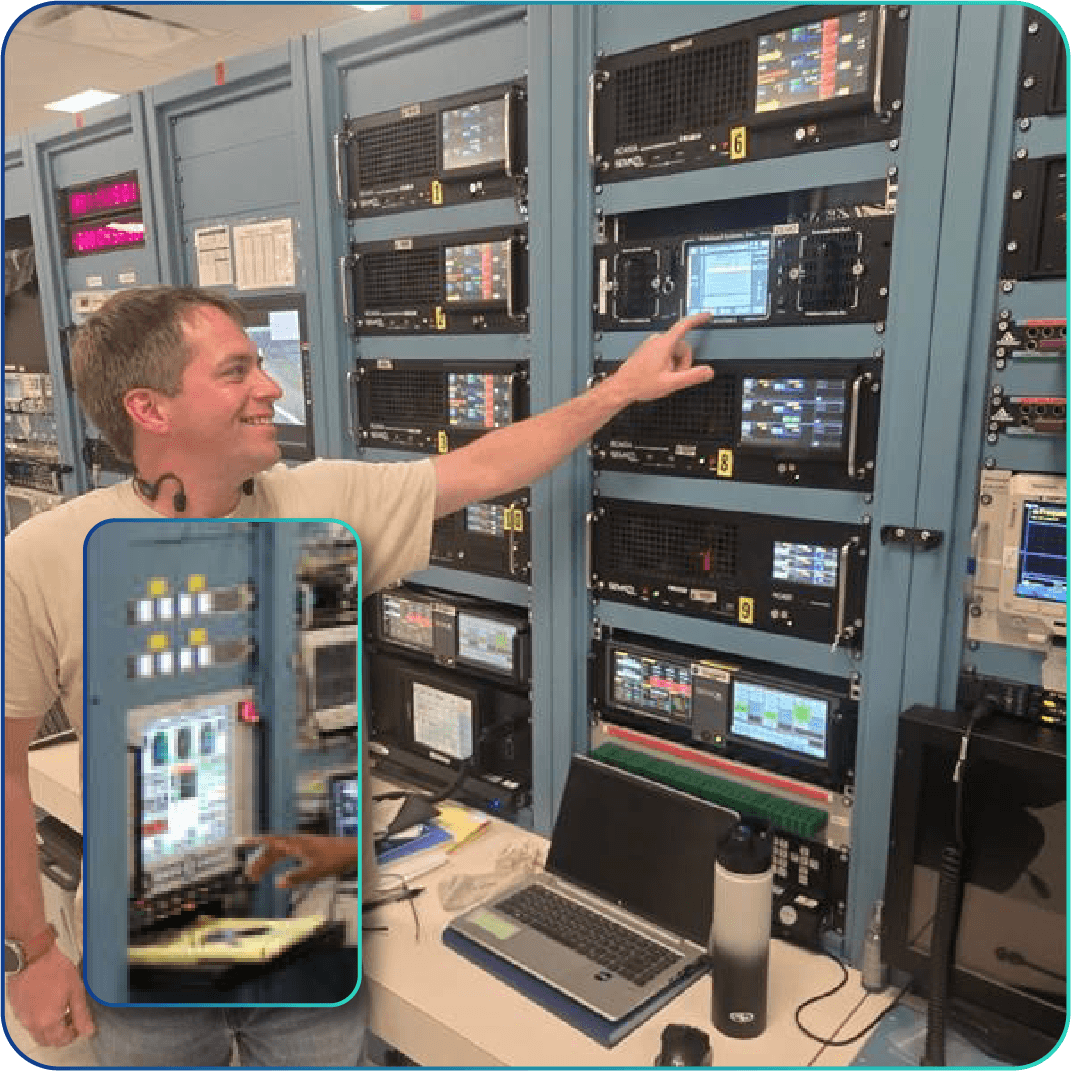
Artemis II marked NASA’s first crewed mission around the Moon in more than 50 years. It was a headline mission for NASA, for human spaceflight, and for everyone watching the return of crewed lunar exploration. But as historic as the launch was, its success depended on far more than the rocket and spacecraft alone. It also depended on the ground systems behind the mission; the systems responsible for acquiring, moving, and preserving telemetry data essential to monitoring the safety and performance of the spacecraft as it carried people back to the moon and through their record-breaking flight.
That is where Delta Telemetry Systems (DTS) came in.
During Artemis II, multiple DTS companies supported the telemetry chain, not with one isolated product, but with several systems working together across the ground architecture. TCS tracking antennas helped acquire telemetry from the launch vehicle so mission teams could monitor its health, status, and performance in real time. GDP TMoIP equipment helped distribute that data between NASA acquisition sites and the main telemetry stations, where it could be used by operators and engineers across the network. And in Bermuda, a Wideband RF recorder captured backup RF data alongside the live telemetry stream, preserving another layer of mission information for replay and post-mission analysis. Together, those systems helped keep critical mission data available from acquisition through transport and backup recording.
TCS-Antenna-System-ACU-Artemis-II
Keeping the Asset in View
Before telemetry can be moved or analyzed, it must be acquired.
For Artemis II, multiple TCS tracking antennas were used to acquire telemetry data from the launch vehicle, helping keep critical telemetry flowing as the mission unfolded. TCS tracking and pointing solutions are built for demanding missile and space applications where accurate pointing, stable tracking, and dependable performance are not optional. On a mission like Artemis II, that acquisition layer is foundational.
The Royal Gazette’s launch coverage even showed TCS ACUs in action at NASA’s Cooper’s Island tracking station in Bermuda, giving a visible reminder that the success of a mission like Artemis II also depends on the people and systems on the ground.
GDP-TMoIP-Gateway-Artemis-II
Moving Telemetry Across the Mission Network
Acquiring telemetry is only the first step. Once that data is received, it still must get where it needs to go.
For Artemis II, GDP TMoIP equipment was used to distribute telemetry data between various NASA acquisition sites and the main telemetry stations. In a mission spread across multiple locations, that transport layer is essential. It is what turns telemetry captured at remote points into usable mission data for operators, engineers, and mission control systems elsewhere on the network.
Data distribution aligns directly with the GDP Model 2355 Telemetry Gateway, which supports telemetry-over-IP distribution and bridges PCM and Ethernet-based environments. For modern launch and space programs, the gateway capability is increasingly important. Missions are not getting simpler, and neither are the networks that support them.
WSI-RF-Recorder-Artemis-II
Capturing a Backup of What Matters
Live telemetry matters, but so does having a backup.
For Artemis II, a Wideband RF recorder in Bermuda was used to capture RF data as a backup to the live telemetry stream. This recording backup layer adds mission assurance. If data needs to be replayed, reviewed, or analyzed after the fact, the RF capture is there. On a mission this visible and this consequential, relying on the live stream alone is not enough.
Wideband’s single-band and multi-band RF recorders are built for launch, missile, and space applications where high-fidelity RF capture supports both real-time operations and post-mission analysis. In the context of Artemis II, that backup recording capability helped reinforce the overall telemetry architecture by preserving another layer of mission data when it mattered most.
One Mission. Multiple DTS Systems.
Artemis II is a strong example of how multiple DTS companies can support the same mission across the telemetry chain:
TCS acquired telemetry from the launch vehicle
GDP transported telemetry between NASA sites
Wideband recorded backup RF data in Bermuda
Together, these systems helped ensure critical mission data could be acquired, transported, and recorded throughout Artemis II.
Bigger than one mission.
Artemis II placed the supporting ground architecture under the kind of scrutiny only a mission of this scale can bring. Every handoff mattered. Every data path mattered. For customers supporting launch, space, and other high-consequence programs, it is a strong example of DTS systems performing where visibility is high, expectations are higher, and there is no room for uncertainty.
From the pad to the tracking sites to backup recording in Bermuda, Delta Telemetry Systems supported the flow of mission data behind Artemis II. If your program depends on trusted acquisition, data distribution, and recording across a distributed mission architecture, DTS is ready to help.
Sollten Sie bereits ein Benutzerkonto haben, melden Sie sich bitte an. Anderenfalls klicken Sie bitte hier, um sich zu registrieren.
Delta Information Systems, Inc.