
Produkt-Neuheit
Figaro-Sensoren für toxische Gase in Anwendungen der Arbeitssicherheit
16.04.2026
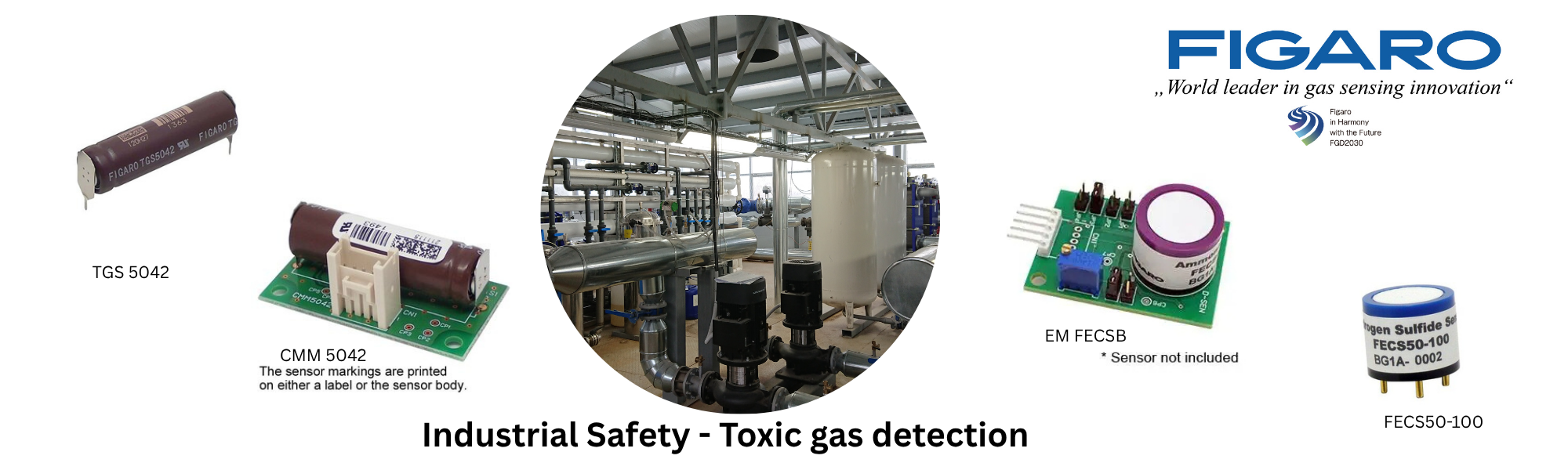
Im Bereich der Arbeitssicherheit ist die Erkennung giftiger Gase wie Kohlenmonoxid (CO), Schwefelwasserstoff (H₂S), Stickstoffdioxid (NO₂) und Ammoniak (NH₃) durch die Notwendigkeit bestimmt, das Personal vor akuter und chronischer Exposition zu schützen, im Einklang mit Arbeitsplatzgrenzwerten und Normen wie EN 62990-1. Typische Anwendungsbereiche sind der Zugang zu beengten Räumen, die Abwasserbehandlung, chemische Verarbeitungsanlagen, Verbrennungsumgebungen und Kühlsysteme, in denen sich giftige Gase schnell ansammeln können. Diese Anwendungen erfordern Sensoren mit hoher Empfindlichkeit im niedrigen ppm-Bereich, schneller Ansprechzeit, hoher Selektivität und langfristiger Stabilität, um eine zuverlässige Alarmauslösung und die Einhaltung von Sicherheitsvorschriften zu gewährleisten. In diesem Zusammenhang bietet Figaro Engineering Inc. eine Reihe von elektrochemischen Sensoren an, die diesen Anforderungen gerecht werden:
Der Figaro TGS 5042 eignet sich hervorragend für die Kohlenmonoxid-Detektion in Anwendungen wie Heizungsräumen und Verbrennungsprozessen. Dank seiner geringen Querempfindlichkeit, seiner langen Lebensdauer (bis zu 10 Jahre) und der Einhaltung der Anforderungen der Norm EN 62990-1 bietet er die für industrielle Anwendungen des Typs SM (Safety Monitoring) erforderliche hohe Linearität und Umgebungsstabilität. Seine typische Ansprechzeit von unter 60 Sekunden und eine lineare Ausgangsabweichung von weniger als ±5 % im Bereich von 0–500 ppm stellen sicher, dass er die zentralen Leistungsanforderungen der Norm für eine zuverlässige Alarmauslösung erfüllt. Darüber hinaus unterstützen seine Fähigkeit, über einen breiten Temperaturbereich einen stabilen Betrieb aufrechtzuerhalten, sowie seine geringe Basislinienabweichung die strengen Haltbarkeits- und Umweltbelastungstests, die für industrielle Gasdetektionsgeräte vorgeschrieben sind.
Der Figaro FECS40-1000 wurde speziell für die CO-Überwachung im Bereich der Arbeitssicherheit entwickelt, insbesondere in engen Räumen und Prozessumgebungen, in denen eine präzise Erkennung geringer Konzentrationen erforderlich ist. Er bietet einen Erfassungsbereich von 0–1000 ppm mit einer Auflösung von 1 ppm, kombiniert mit einer schnellen Ansprechzeit (<30 Sekunden T90), was eine rasche Erkennung gefährlicher Zustände ermöglicht. Seine hohe Selektivität gegenüber CO und minimale Querempfindlichkeit gegenüber Gasen wie CO₂, H₂S, NO₂ und NH₃ gewährleisten genaue Messwerte in Mischgasumgebungen. Zusätzliche Merkmale wie eine geringe Basisliniendrift (<5 % pro Jahr) und ein stabiler Ausgangssignalausgang sorgen für langfristige Zuverlässigkeit in anspruchsvollen industriellen Anwendungen.
Die Figaro FECS44-Serie umfasst vier Sensoren, die jeweils für unterschiedliche Ammoniakkonzentrationsbereiche optimiert sind und sich daher ideal für Anwendungen wie Abwasserbehandlung, Düngemittelproduktion und Kühlsysteme eignen. In diesen Umgebungen birgt Ammoniak sowohl toxische als auch korrosive Risiken, was eine hohe Empfindlichkeit im niedrigen ppm-Bereich, eine schnelle Ansprechzeit und eine hohe Selektivität erfordert. Die FECS44-Serie bietet eine schnelle Ansprechzeit, lineare Ausgangssignale und eine stabile Basislinie und ermöglicht so eine zuverlässige Erkennung im Einklang mit den Grenzwerten für die berufliche Exposition. Ihr auslaufsicheres Design und ihre hervorragende Beständigkeit gegenüber Störgasen, die die vieler vergleichbarer elektrochemischer Sensoren übertrifft, gewährleisten einen zuverlässigen Betrieb unter rauen industriellen Bedingungen, wo eine frühzeitige und genaue Erkennung zum Schutz von Personal und Ausrüstung unerlässlich ist.
Der Figaro FECS42-20 ist für die Stickstoffdioxid-Detektion in Anwendungen wie der Stromerzeugung, der chemischen Verarbeitung und in Produktionsumgebungen optimiert. Da NO₂ selbst in sehr geringen Konzentrationen hochgiftig ist, erfordern diese Anwendungen eine schnelle Ansprechzeit und hohe Selektivität im ppm- und Sub-ppm-Bereich. Der FECS42-20 gehört zu den am schnellsten ansprechenden Sensoren seiner Klasse und ermöglicht so eine rasche Erkennung und rechtzeitige Alarmauslösung. In Kombination mit seinem linearen Ausgangssignal und der stabilen Basislinie liefert er präzise und zuverlässige Ergebnisse. Die hohe Genauigkeit des Sensors bei NO₂ und seine geringe Anfälligkeit für Störungen machen ihn perfekt für anspruchsvolle Umgebungen.
Der Figaro FECS50-100 wurde speziell für die Schwefelwasserstoffdetektion in anspruchsvollen Umgebungen wie Öl- und Gasanlagen, Kläranlagen und Biogasanlagen entwickelt, in denen H₂S selbst in geringen Konzentrationen ein unmittelbares Toxizitätsrisiko darstellt. In diesen Anwendungen sind oft mehrere toxische Gase vorhanden, weshalb es unerlässlich ist, jedes Gas genau und unabhängig zu messen, um die Einhaltung der Expositionsgrenzwerte sicherzustellen und die richtigen Sicherheitsmaßnahmen auszulösen. Ein wesentlicher Vorteil des FECS50-100 ist seine außergewöhnlich geringe Querempfindlichkeit, die viele vergleichbare Sensoren übertrifft, indem sie den Einfluss von Störgasen auf die Messgenauigkeit deutlich reduziert. Dies gewährleistet eine hohe Zuverlässigkeit der H₂S-Messwerte, selbst in komplexen Mischgasumgebungen. In Kombination mit seiner schnellen Ansprechzeit, der hohen Empfindlichkeit im niedrigen ppm-Bereich und dem stabilen Ausgangssignal ermöglicht der Sensor eine schnelle und zuverlässige Alarmauslösung. Seine robuste Bauweise gewährleistet zudem eine konstante Leistung unter feuchten und kontaminierten Bedingungen, unter denen H₂S häufig vorkommt.
Figaro Engineering Inc.